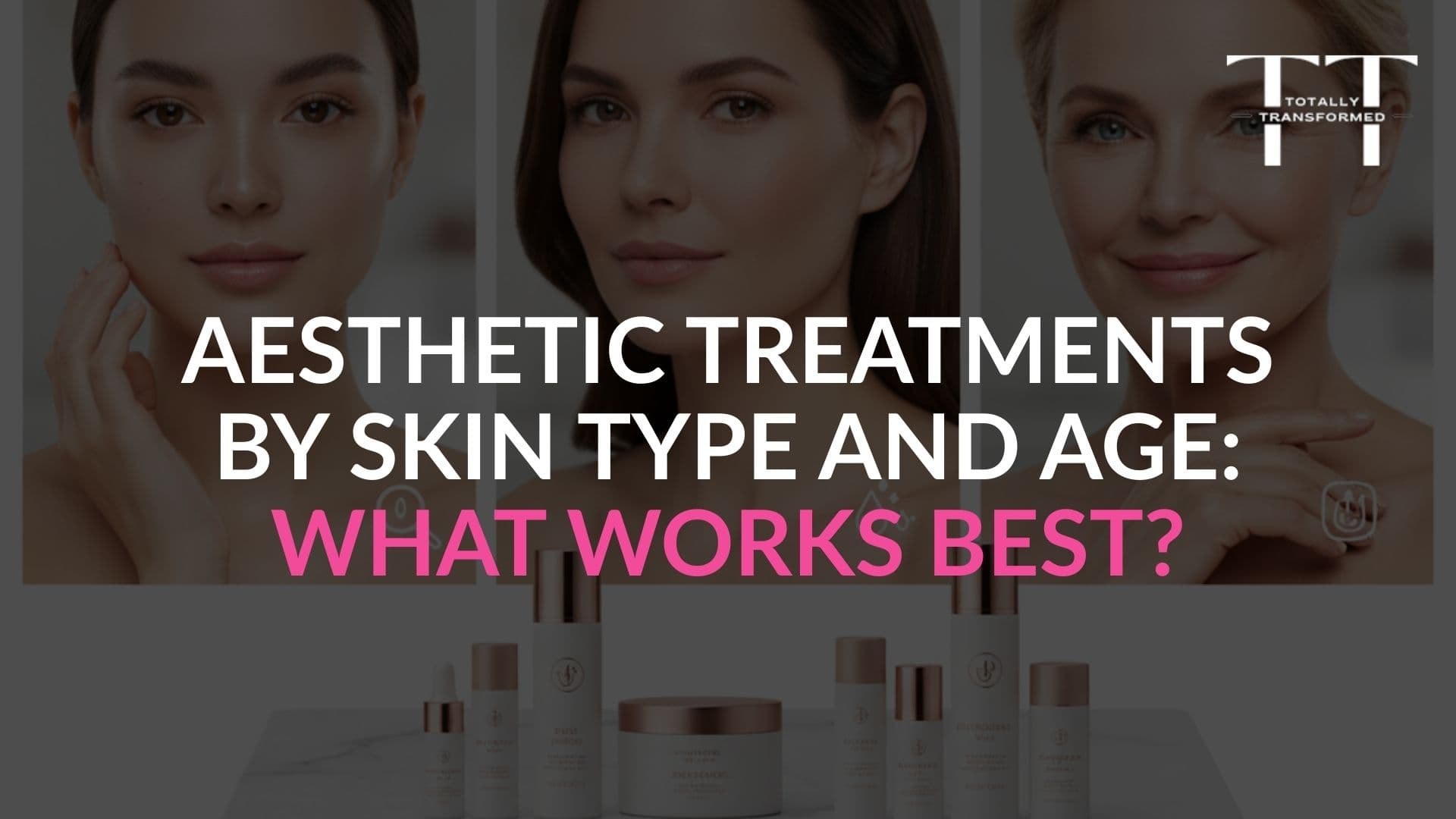
If you’ve ever asked, “What treatment is actually right for my skin?” — you’re not alone.
I hear this question in consultations all the time.
The truth is simple: the best aesthetic treatment depends on two core factors:
- Your skin type
- Your age-related skin changes
Not social media trends. Not what worked for your friend. Not what’s popular this year.
In this guide, I’ll walk you through exactly what works best by skin type and age group. We’ll cover common concerns, recommended procedures, and safety considerations — clearly and practically.
If you’re considering aesthetic treatments and want real guidance, this is for you.
Why Skin Type and Age Matter in Treatment Planning
Your skin at 25 behaves very differently from your skin at 45.
Two key biological shifts explain this:
- Collagen production decreases by about 1% per year after age 20 (American Academy of Dermatology).
- Skin barrier function weakens with age, increasing sensitivity and slower healing.
At the same time:
- Oil production varies by hormones.
- Melanin levels affect laser safety.
- Healing speed decreases over time.
This is why customization is not optional. It’s essential.
Aesthetic Treatments by Skin Type
Your skin type determines how it responds to peels, lasers, injectables, and downtime. Oil production, barrier strength, melanin levels, and inflammation risk all influence safety and results. Treating skin based on behavior rather than trends leads to better outcomes and fewer complications.
Oily and Acne-Prone Skin
Excess oil and chronic inflammation increase breakouts, enlarge pores, and raise the risk of scarring. Active acne must be stabilized before treating texture.
What works best
- Salicylic acid chemical peels
- HydraFacial with deep extraction
- Blue LED therapy
- Microneedling for stable acne scars
- Fractional laser for deeper scarring
What to avoid
- Resurfacing during active cystic acne
- High-heat laser on inflamed skin
Clinical tip: Always treat inflammation first and scars second. Sequence determines outcome quality.
Dry and Dehydrated Skin
Low water content weakens the barrier and exaggerates fine lines. The goal is restoration, not exfoliation.
What works best
- Hydration-focused facials
- Skin boosters
- Gentle lactic acid peels
- Red LED therapy
What to avoid
- Strong resurfacing
- Over-exfoliation
- Frequent aggressive treatments
Strengthening the barrier improves healing and enhances every other procedure.
Sensitive or Reactive Skin
Reactive skin is prone to redness, flushing, and irritation. Energy-based treatments must be conservative.
What works best
- LED therapy
- Low-strength chemical peels
- Non-ablative laser
- Calming medical facials
What to avoid
- High-energy lasers
- Stacking multiple treatments
- Heat-heavy procedures
Lower intensity with longer intervals produces safer, more stable results.
Combination Skin
Different areas of the face behave differently. The T-zone may be oily while cheeks remain dry.
What works best
- Customized facials
- Microneedling
- Balanced chemical peels
- Zone-adjusted laser treatments
What to avoid
- Uniform treatment protocols
- Over-treating dry areas
Targeting each facial zone individually creates more even, predictable outcomes.
Hyperpigmented or Melanin-Rich Skin
Higher melanin levels increase the risk of post-inflammatory hyperpigmentation if treated incorrectly. Energy settings must be precise.
What works best
- Low-energy laser
- Pigment-safe peels
- Conservative microneedling
- Medical pigment regulation protocols
What to avoid
- Excessive heat
- Aggressive resurfacing
- High-density laser passes
Experience and careful calibration are essential for safe, effective correction.
Sun-Damaged Skin
Chronic UV exposure breaks down collagen and elastin, leading to rough texture, discoloration, and laxity.
What works best
- IPL
- Fractional laser resurfacing
- Radiofrequency tightening
- Collagen stimulators
What to avoid
- Treating without consistent sun protection
- Ignoring lesion screening before treatment
Resurfacing improves texture. Collagen stimulation restores structure. Both are often needed for lasting improvement.
Aesthetic Treatments by Age Group
Skin aging is not just about wrinkles. It involves gradual collagen loss, fat redistribution, slower cell turnover, and reduced elasticity. Since collagen decreases by about 1% per year after age 20, structural changes compound over time. That is why treatment strategies should evolve with each decade.
In Your 20s – Prevention and Skin Maintenance
Your 20s are about protecting what you already have. Skin is still firm and resilient, but habits formed now affect long-term aging.
Typical Concerns
- Acne
- Early expression lines
- Oil imbalance
Treatment Focus
- Prevention
- Collagen preservation
- Skin clarity
Recommended Treatments
- Chemical peels
- HydraFacial
- Acne scar therapy
- Preventative Botox when appropriate
According to the American Society of Plastic Surgeons, neuromodulator treatments have increased by over 70% since 2000, reflecting growing interest in early prevention. In this decade, subtlety and consistency matter most.
In Your 30s – Early Correction and Collagen Support
In your 30s, collagen decline becomes more visible. Fine lines linger longer. Pigmentation appears from cumulative sun exposure. Recovery slows slightly.
Typical Changes
- Fine lines
- Pigmentation
- Mild volume loss
- Slower recovery
Recommended Treatments
- Botox
- Microneedling
- Skin boosters
- IPL for pigmentation
In my experience, clients in their 30s benefit most from collagen-stimulating treatments started early. Small, strategic interventions now reduce the need for aggressive correction later.
In Your 40s – Volume Loss and Skin Laxity
By your 40s, aging becomes structural. Fat pads shift. Jawlines soften. Elasticity declines. Surface treatments alone are no longer enough.
Typical Changes
- Deeper wrinkles
- Jawline softening
- Mid-face flattening
- Dullness
Recommended Treatments
- Dermal fillers
- Radiofrequency tightening
- Fractional laser
- Combination therapy
Treatment planning in this decade focuses on restoring support, not just smoothing lines. Layered approaches often deliver the most natural outcomes.
50s and Beyond – Structural Support and Advanced Rejuvenation
In your 50s and beyond, skin becomes thinner and more fragile. Healing takes longer. Volume loss is more pronounced.
Typical Changes
- Thinning skin
- Significant laxity
- Deep lines
- Age spots
Recommended Treatments
- Biostimulators
- RF microneedling
- Fractional laser
- Strategic filler placement
Although recovery may extend, collagen stimulation remains effective at this stage. I have seen meaningful improvements in clients over 60 who commit to gradual, staged treatment plans focused on long-term skin health rather than quick fixes.
Safety Considerations by Skin Type
Every skin type reacts differently to lasers, peels, and injectables. What works safely for one person may trigger pigmentation or irritation in another. That’s why proper evaluation always comes before treatment.
Across all skin types:
- Assess Fitzpatrick skin type before laser procedures
- Avoid treating active infections or open lesions
- Adjust energy settings carefully
- Review medication and skincare history
- Control inflammation before resurfacing
Safety is not a separate step. It is part of the treatment plan. When protocols are tailored correctly, outcomes are smoother, more predictable, and longer lasting.
Safety Considerations by Age
Age affects more than appearance. It changes how your skin heals, responds to energy-based devices, and tolerates injectables. Treatment intensity, frequency, and recovery planning must be adjusted accordingly.
As we age:
- Healing slows
- Skin becomes thinner
- Bruising becomes more common
- Downtime may extend
This does not mean fewer options. It means smarter planning. Spacing treatments properly and setting realistic expectations leads to safer procedures, smoother recovery, and higher long-term satisfaction.
Contraindications and When to Postpone Treatment
Not every moment is the right moment for a procedure. Even safe, well-planned treatments should be delayed if your skin or overall health is not in an optimal state. Rushing into treatment during active inflammation or recovery can increase complications and affect results.
Delay treatment if you have:
- Active skin infection
- Recent sunburn
- Uncontrolled acne flare
- Pregnancy (for certain procedures)
- Recent isotretinoin use
When in doubt, wait. Healthy skin responds better, heals faster, and delivers safer, more predictable outcomes.
Choosing a Qualified Aesthetic Provider
Choosing the right provider is just as important as choosing the right treatment. Even the best procedure can deliver poor results in inexperienced hands. Your safety, outcome, and long-term skin health depend on proper assessment and expertise.
Here’s what we recommend:
- Verify medical credentials and training
- Ask about experience with your specific skin type
- Review real, unfiltered before-and-after photos
- Expect a personalized treatment plan
- Avoid one-size-fits-all packages or rushed consultations
In our clinic, we never recommend a procedure without a full skin assessment first. That step alone prevents most avoidable complications and ensures treatments are truly tailored to you.
Conclusion: Personalization Over Trends
If you remember one thing, let it be this:
- Skin type determines safety.
- Age determines structural needs.
- Personal goals determine the strategy.
The best aesthetic treatments are tailored, gradual, and thoughtful. When biology meets proper planning, results look natural and feel like you.
At Totally Transformed, we guide you through that process step by step. We assess your skin type, age-related changes, and long-term goals before recommending anything. No rushed decisions. No trend-based packages. Just a personalized plan designed to protect your skin and deliver results you can feel confident in.