A small leak when you laugh. A dash to the loo that will not wait. Planning a walk around where the nearest toilets are.
If that sounds familiar, you are not alone. Bladder weakness during perimenopause and menopause is one of the most common symptoms women experience, and one of the least talked about. It feels embarrassing, so it gets quietly managed rather than mentioned.
Here is why it happens, what genuinely helps, and where pelvic floor treatment in Newcastle fits in.
Why bladder leaks become more common during menopause
Oestrogen helps keep the tissues of the bladder, urethra and pelvic floor thick, elastic and well supplied with blood. As it falls, those tissues can become thinner and less supportive. The muscles that close the urethra may not hold as firmly as they once did, and the bladder lining can become more easily irritated.
Menopause also arrives on top of everything the pelvic floor has already been through: pregnancy, childbirth, heavy lifting, a long-term cough, constipation or extra weight. For many women, it is simply the point where a pelvic floor that was just about coping starts to struggle.
One thing worth saying clearly: not every bladder problem is caused by menopause. Urinary tract infections, some medications, diabetes and other conditions can all affect bladder control, which is why a proper assessment matters before you decide on any treatment.
The symptoms women don't always talk about
Bladder weakness shows up in a few different ways, and many women notice more than one:
- Leaking when you cough, sneeze, laugh, run or lift something (stress incontinence)
- A sudden, urgent need to go that is hard to put off
- Going to the toilet far more often than you used to, including at night
- A feeling that your bladder has not quite emptied
- Dryness or soreness around the vaginal area, which often goes hand in hand with bladder symptoms after menopause
Then there is the part that never appears on a symptom list: the loss of confidence. Turning down a fitness class. Checking where the toilets are before agreeing to a day out. Wearing dark clothes just in case. These adjustments creep in so gradually that many women do not notice how much their lives have shrunk around them.
Why leaks shouldn't be accepted as "just getting older"
Bladder leaks are common, but common is not the same as normal, and it is certainly not the same as untreatable. The NHS is clear on this: urinary incontinence can be treated at any age, and most women improve with the right approach.
Many women across Newcastle upon Tyne and North Tyneside put up with symptoms for years before mentioning them to anyone, even their GP. The earlier you address pelvic floor weakness, the more options you have, and the less your everyday life has to bend around it.
What can help
There is a well-established path for this, set out in NHS advice and NICE guidance, and most of it starts with simple steps.
Pelvic floor exercises
Pelvic floor muscle training is the first treatment NICE recommends for stress and mixed incontinence. The muscles respond to training like any other, but they need consistency: at least three months before you judge the results. Technique matters too. Plenty of women squeeze the wrong muscles or hold their breath, which is where expert guidance pays off.
Bladder training and lifestyle changes
For urgency and frequency, bladder training (gradually stretching the gap between toilet visits) is recommended for at least six weeks. Cutting back on caffeine, fizzy drinks and alcohol, avoiding constipation, stopping smoking and managing your weight all take pressure off the bladder. Drinking too little usually makes urgency worse, because concentrated urine irritates the bladder.
Specialist physiotherapy
A women's health physiotherapist can assess your pelvic floor properly, correct your technique and build a programme around your symptoms. Your GP can refer you, and NHS pelvic health physiotherapy is available across the North East.
Medical advice
Speak to your GP, particularly if symptoms came on suddenly, if there is pain or blood in your urine, or if you are already managing other menopause symptoms. Vaginal oestrogen, prescribed as a cream, pessary or ring, can help the thinning tissues around the bladder and urethra, and is worth discussing alongside the rest of your menopause care.
The Ultra Tesla Pelvic Floor Chair: a non-invasive option
Some women want help building pelvic floor strength more quickly, or find daily exercises hard to keep up. This is where our Ultra Tesla Pelvic Floor Chair comes in.
The chair uses high-intensity electromagnetic stimulation to produce deep contractions in the pelvic floor muscles. You sit on it fully clothed for around 28 minutes while the device does the work: thousands of contractions in a single session, far more than you could manage on your own. No needles, no probes, no need to undress. Most women describe a strong, rhythmic pulsing sensation, and many scroll through their phone while it runs.
A typical course is six sessions over about three weeks, with top-up sessions as needed. Many of our clients in Forest Hall use it as part of their wider menopause support, alongside the exercises and lifestyle changes above rather than instead of them.
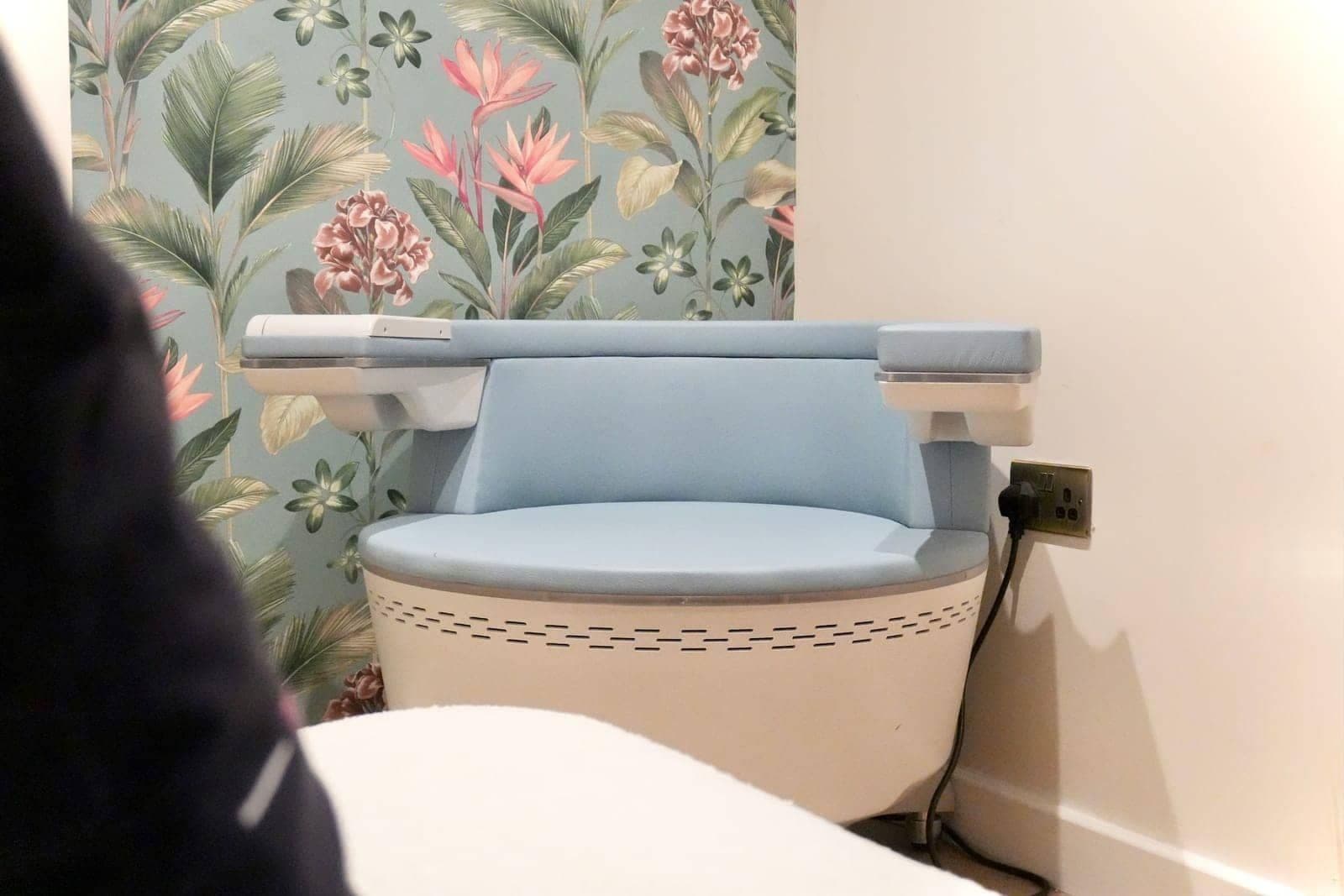
You can read more about how a session works, and what it costs, on our Ultra Tesla Chair pelvic floor treatment page.
An honest word on suitability and results
We would rather be straight with you than oversell this. The chair strengthens the pelvic floor muscles. It does not cure incontinence, and results vary depending on what is causing your symptoms and how weak the muscles are. It tends to help most where symptoms are linked to muscle weakness. It is not suitable during pregnancy, with a copper coil, or with electronic or metal implants in the area, and it is never a substitute for getting new or unusual symptoms checked by a doctor.
That is why every client starts with an assessment. We talk through your symptoms and history, screen for anything that needs a GP first, and tell you honestly whether we think the chair is likely to help. If we do not think it is right for you, we will say so.
Struggling with bladder weakness or simply wondering if our pelvic floor chair could help? Book a free, confidential consultation at Totally Transformed in Forest Hall. We'll talk through your concerns and help you explore your options.
Book your free consultation on Fresha
If you would rather try the chair before deciding, our Pelvic Floor Assessment and Trial includes a full consultation, suitability screening and a 15-minute trial session for £60, fully redeemable against any course.
Frequently asked questions
Can menopause cause bladder leaks?
Yes. Falling oestrogen thins and weakens the tissues that support the bladder and urethra, which makes stress leaks and urgency more likely. Menopause is rarely the only factor, and some bladder problems have other causes, so it is worth getting symptoms assessed rather than assuming.
Why do I suddenly need the toilet more often?
Urgency and frequency are usually signs of an overactive bladder, which becomes more common after menopause. Caffeine, alcohol, fizzy drinks and drinking too little can all make it worse. A sudden change, or any pain or blood in your urine, should be checked by your GP.
Can pelvic floor exercises improve bladder control?
For most women, yes. NICE recommends supervised pelvic floor muscle training for at least three months as the first treatment for stress and mixed incontinence. The key is doing them correctly and consistently. A pelvic health physiotherapist can check your technique.
Does a pelvic floor chair work?
Electromagnetic pelvic floor chairs produce deep muscle contractions that are difficult to achieve voluntarily, and many women notice better control and confidence over a course. Results vary, and the chair works best alongside good technique and healthy bladder habits rather than as a cure on its own. An assessment will tell you whether it is likely to help in your case.
Is pelvic floor treatment suitable for menopausal women?
In most cases, yes. Exercises, bladder training, physiotherapy and, where appropriate, vaginal oestrogen are all routinely used for menopausal women. The Ultra Tesla Chair suits many women in perimenopause and beyond, provided there are no contraindications such as pregnancy, a copper coil or electronic implants. Suitability is confirmed at your consultation.
About Totally Transformed
Totally Transformed is a family-run clinic in Forest Hall, Newcastle upon Tyne, opened by Denise Francis in 2018 and run with her daughter Sarah. We specialise in non-surgical body and face treatments, and every treatment starts with a free consultation: an honest conversation about what is bothering you, what might help, and whether we are the right people to help with it.
If bladder weakness has been quietly shaping your days, you do not have to put up with it. Book a free, confidential consultation and let us talk it through.
Sources: NHS, Urinary incontinence; NHS, Menopause symptoms; NICE guideline NG123, Urinary incontinence and pelvic organ prolapse in women. This article is general information, not medical advice. Please see your GP about new or worsening symptoms.